🧄 Wild Garlic (Ramsons) Allium ursinum
This is a guide, not a substitute for expert identification. Foraging guides - including this one - can contain errors. If you are not completely certain of an identification, do not eat it. Cross-check against at least two independent sources, and when in doubt, consult a local foraging expert or an experienced forager in person before eating anything wild.
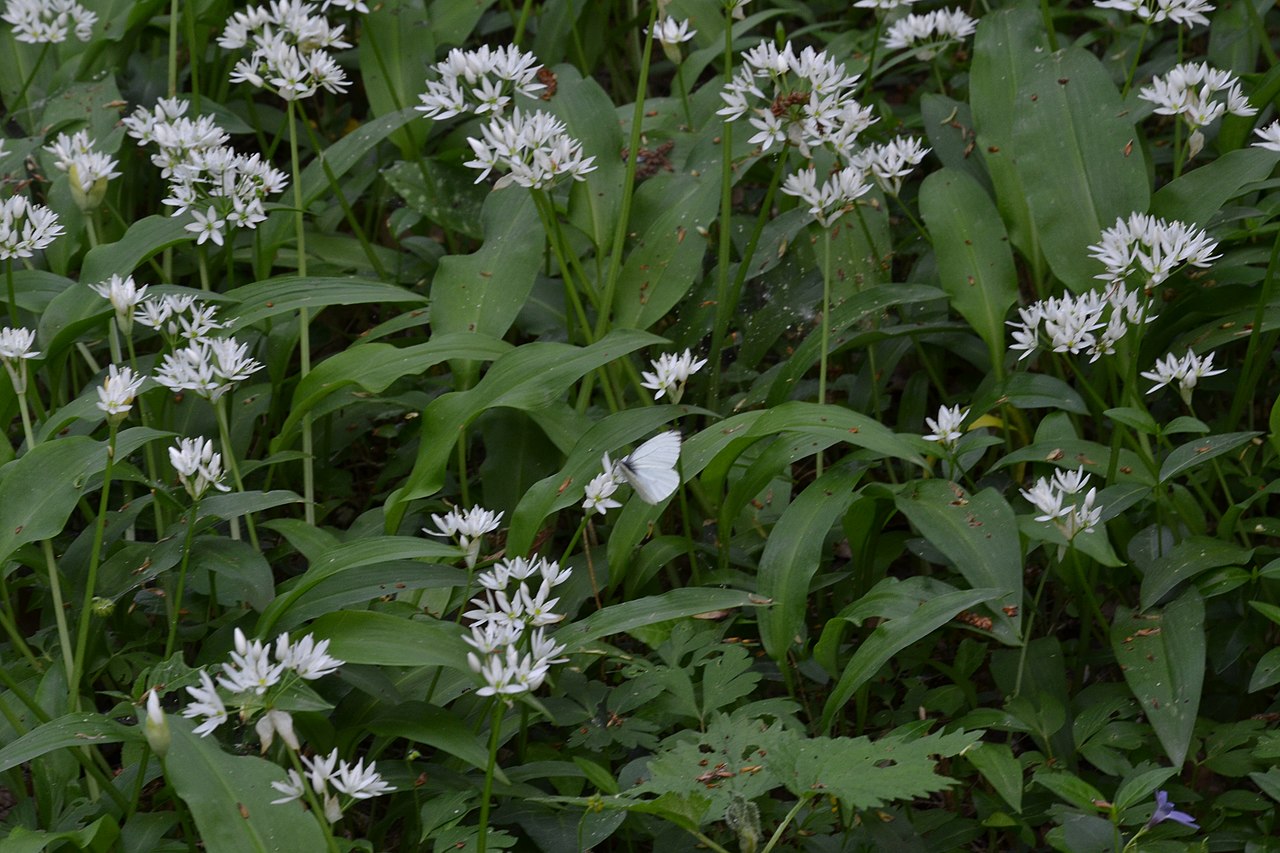
A carpet-forming woodland plant whose broad green leaves and intense garlic smell make it one of the easiest - and most rewarding - spring foraging finds, but it grows alongside several toxic look-alikes that must never be confused with it.
Identification
Wild garlic (ramsons) forms dense green carpets on woodland floors from early spring. Each plant produces one or two long, pointed, oval leaves with smooth (untoothed) edges, growing individually from the base on their own stalk rather than sheathing a central stem. Star-shaped white flowers with six narrow petals appear from April to June in loose umbrella-like clusters (umbels) on a separate leafless stalk. The single most important identification feature is smell: crushing or rubbing a leaf between the fingers releases an unmistakably strong, pungent garlic/onion aroma. This smell test is the standard safety check recommended by UK foraging authorities - if a leaf does not smell strongly of garlic when crushed, do not eat it, as it is almost certainly a toxic look-alike instead.
⚠️ Dangerous look-alikes - read this before picking anything
Wild garlic has three seriously toxic look-alikes that commonly grow in the same woodland habitat, and confusing them is a recognised, real-world poisoning risk in the UK: (1) Lily of the valley (Convallaria majalis) - toxic, contains cardiac glycosides; its leaves can look similar before flowering, but they emerge in pairs from a single stem/point rather than individually, and critically have no garlic smell at all when crushed. (2) Lords-and-ladies / cuckoo-pint (Arum maculatum) - toxic and irritant (contains calcium oxalate crystals causing burning/blistering of the mouth and throat); its young leaves are glossy and arrow-shaped with backward-pointing lobes at the leaf base, a shape wild garlic leaves lack, and again there is no garlic smell. (3) Autumn crocus / meadow saffron (Colchicum autumnale) - extremely toxic (contains colchicine, a potent poison with no antidote, and has caused fatalities); its strap-like spring leaves can resemble wild garlic's, and it also lacks any garlic smell. The verified, standard safety rule from UK foraging and wildlife sources (Wild Food UK, Woodland Trust, Paul Kirtley) is: crush a leaf and smell it before picking anything - if it does not smell strongly and unmistakably of garlic, do not eat it, and do not rely on leaf shape alone since these look-alikes can appear very similar to an untrained eye, especially in poor light or before flowering. One source (Wild Food UK) also flags young bluebell (Hyacinthoides non-scripta) leaves as a slender-leaved look-alike to double-check by smell, though bluebell leaves are narrower than ramsons and less commonly mistaken for it.
UK habitat
Ramsons is widespread throughout Britain and is considered an ancient-woodland indicator species. It favours damp, shaded deciduous woodland, especially on chalky or neutral soils near streams and rivers, but also occurs in scrub and shady hedgerows. Where established it typically forms extensive, dense carpets covering the woodland floor.
Legal notes
Not protected under the Wildlife and Countryside Act 1981 Schedule 8 - wild garlic is common and widespread. Picking leaves and flowers for personal use from wild-growing plants on any land is not theft under Theft Act 1968 s4(3), provided it is not for commercial sale or reward. This covers foliage and flowers only, not the bulb - digging up or uprooting whole plants without the landowner's permission is a separate matter and can also cause lasting damage to a colony. See the full UK foraging law guide for the general rules.