🥬 Sea Lettuce Ulva lactuca
This is a guide, not a substitute for expert identification. Foraging guides - including this one - can contain errors. If you are not completely certain of an identification, do not eat it. Cross-check against at least two independent sources, and when in doubt, consult a local foraging expert or an experienced forager in person before eating anything wild.
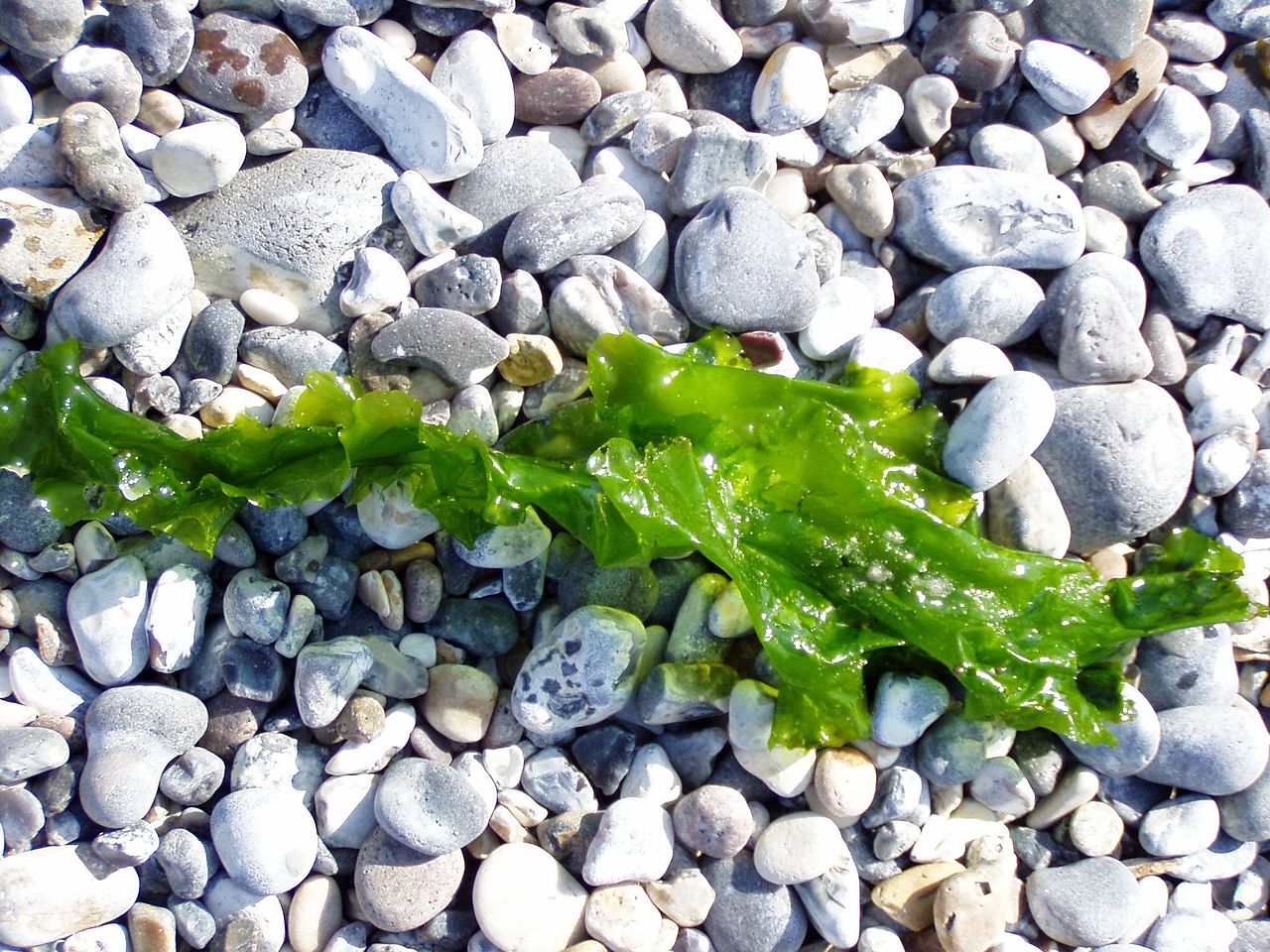
Sea lettuce is a bright green, sheet-like seaweed found in rockpools and on rocks around the UK coast, easy to identify and one of the most commonly foraged UK seaweeds. It thrives in nutrient-rich water, which means gathering-site choice matters more for this species than for most.
Identification
Sea lettuce forms thin, wavy, translucent green sheets (only a few cells thick) up to around 45cm long, attached by a small disc-shaped holdfast with no stem (stipe). Colour shifts with age: pale green when young, bright green when mature, darkening or yellowing when old or sun-bleached. If the frond is tubular rather than flat, it is the related gutweed (Ulva intestinalis) instead. Sea lettuce grows on rocks and rockpool edges, and epiphytically on other larger seaweeds, between the mid-to-high and low tide marks on sheltered to semi-exposed shores, and is found all around the UK from Cornwall to Scotland.
⚠️ Dangerous look-alikes - read this before picking anything
There are no acutely toxic seaweed species native to UK shores comparable to some tropical species - this is a genuinely lower-risk category than shellfish or fungi. The one UK seaweed foragers are told to avoid is Desmarestia ('acid weed'), found mainly in deeper subtidal water; it is not poisonous but releases acid when damaged, tastes unpleasant and can spoil other seaweed gathered alongside it - a practical nuisance, not a toxicity hazard. The real safety issue with sea lettuce specifically is that it grows especially well in nutrient-enriched water, including near sewage outfalls and river mouths, so it can be abundant in exactly the places you should avoid. Harvest only from clean rocky shores well away from any outfall or pollution source, take live attached fronds rather than decaying material from the strandline, and rinse thoroughly before eating.
UK habitat
Rockpools and rocks between the high and low tide marks on sheltered to semi-exposed coasts, and clinging epiphytically to larger seaweeds. Common all around the UK from Cornwall to Scotland, and especially abundant in nutrient-rich estuaries, bays and rockpools.
Legal notes
The foreshore below mean high water mark is generally owned by the Crown Estate, a local authority or a private estate. Small-scale hand-harvesting of seaweed for personal use is generally not licensed, but the Crown Estate requires a licence for any commercial or reward-based seaweed harvesting from its foreshore or seabed, and some shores fall within Marine Conservation Zones, SSSIs or local byelaws that restrict or prohibit collection. Cut fronds rather than pulling up the holdfast so the plant can regrow, and check local byelaws/protected-area status before gathering in bulk. See the full UK foraging law guide for the general rules.